
Beer Line Cleaning for Bars and Restaurants in Chicagoland
Every time beer moves through a draft line it leaves a little behind: yeast, proteins, sugars and minerals. Left in place, that buildup gives bacteria and wild yeast somewhere to grow, and it shows up in the glass as sour, buttery or stale flavors and foamy pours, even from a fresh keg.
Our beer line cleaning service runs on a set schedule for bars, restaurants, taprooms, hotels and event venues in Chicago and the suburbs. Every line is cleaned from the coupler to the faucet, and the parts that touch beer are taken apart and cleaned by hand.
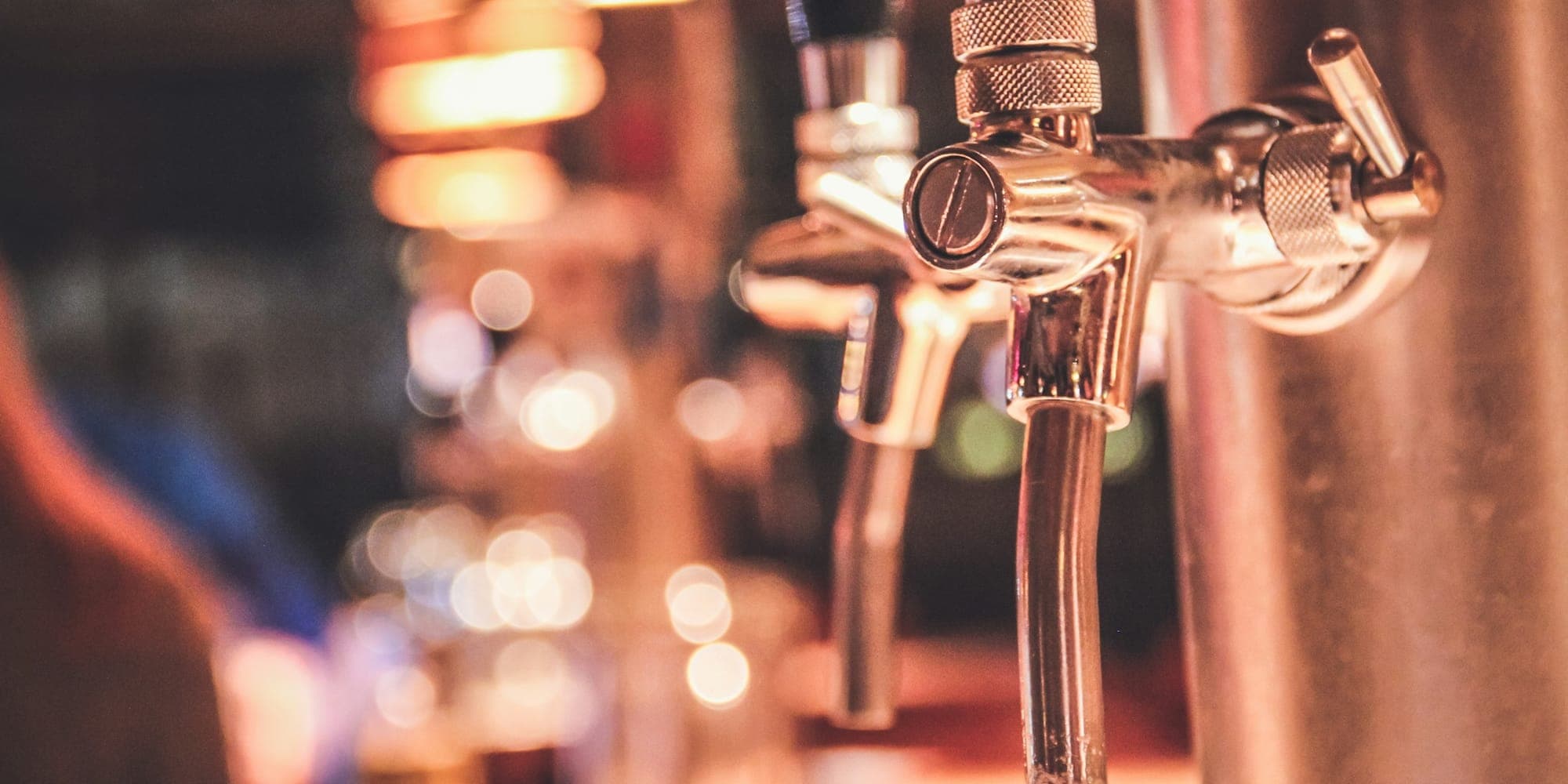
What a draft line cleaning covers
- Flushing the beer out of each line before cleaning starts.
- Circulating a line-cleaning solution through the full run, from the coupler at the keg to the faucet at the bar.
- Rinsing with clean water until no chemical remains in the line.
- Taking faucets and couplers apart, scrubbing them and reassembling them.
- Looking over washers, seals and other small parts that affect how beer pours.
Each cleaning is logged with the date and signed by the person who did the work, so your cleaning record stays current.
How the work is done
Circulating the cleaning solution, rather than letting it sit in the line, keeps it moving against the inside walls of the tubing, where buildup collects. Once the line is clean it is rinsed until the water runs clear of chemical, then filled with beer again before the tap goes back into service.
Lines also collect beerstone, a mineral scale that the regular caustic cleaning does not fully remove. Industry guidance adds a periodic acid cleaning to clear it. Faucets and couplers get their own attention, because tap line cleaning that stops at the lines misses the small spaces inside them where beer sits.
What Illinois requires
Illinois requires draft beer equipment to be cleaned at least once a week, or at least every two weeks for systems designed to limit buildup, such as glycol or constant-cold systems, as long as those are checked weekly. A record of cleaning dates, signed by the person who did the cleaning, must be kept (11 Ill. Adm. Code 100.160(b)).
Signs your lines are overdue
- A beer tastes sour, buttery or stale, or different from the same beer in a bottle or can.
- Pours turn foamy even though the keg, gas and temperature have not changed.
- Beer that should be clear looks hazy in the glass.
- Fruit flies gather around the faucets or drip trays.
- Faucets show mold or residue, or feel sticky when you open them.
What affects the scope
The work depends on how many taps you run, whether the system is direct-draw or long-draw, how far the lines travel from the cooler to the bar, and how many separate bars or portable systems are on site. Lines that are stained or worn past the point where cleaning helps may need replacing. Pricing is custom, based on the number of taps, the type of system, and the service schedule or contract length.
Related services
Where we work
We work on commercial draft systems in the City of Chicago and suburban Cook, Lake, DuPage and McHenry counties.
Common questions
How often should beer lines be cleaned?
Illinois sets the minimum at once a week, or every two weeks for certain systems designed to limit buildup if they are checked weekly. On top of that, the Brewers Association's Draught Beer Quality Manual recommends cleaning lines at least every two weeks and taking faucets apart to clean them at the same interval. The Illinois rule and industry guidance.
Do you take the faucets and couplers apart?
Yes. Faucets and couplers are taken apart, scrubbed and reassembled so the parts that touch beer get cleaned along with the lines. They hold beer in small spaces where buildup and mold collect, and flushing the line does not reach them.
Do lines ever need replacing instead of cleaning?
Sometimes. Older vinyl lines can become stained, stiff or permanently flavored, and at that point cleaning no longer brings them back. Replacing those sections is the better fix, and it can be handled as a repair. Repair and service.
Get in touch
Tell us about your bar, restaurant or venue and what your draft system needs.