
Beer Gas and CO2 Systems for Bars and Restaurants in Chicagoland
Beer gas does two jobs in a draft system: it pushes beer from the keg to the faucet, and it keeps the beer carbonated at the level the brewer intended. The right gas at the right pressure gives a clean pour with a good head. The wrong mix or setting gives foam, flat beer, or beer that slowly changes in the keg.
We set up and service the gas side of commercial draft systems in Chicago and the suburbs: regulators, gas blenders, gas lines, leak checks, and cylinder and bulk CO2 connections.
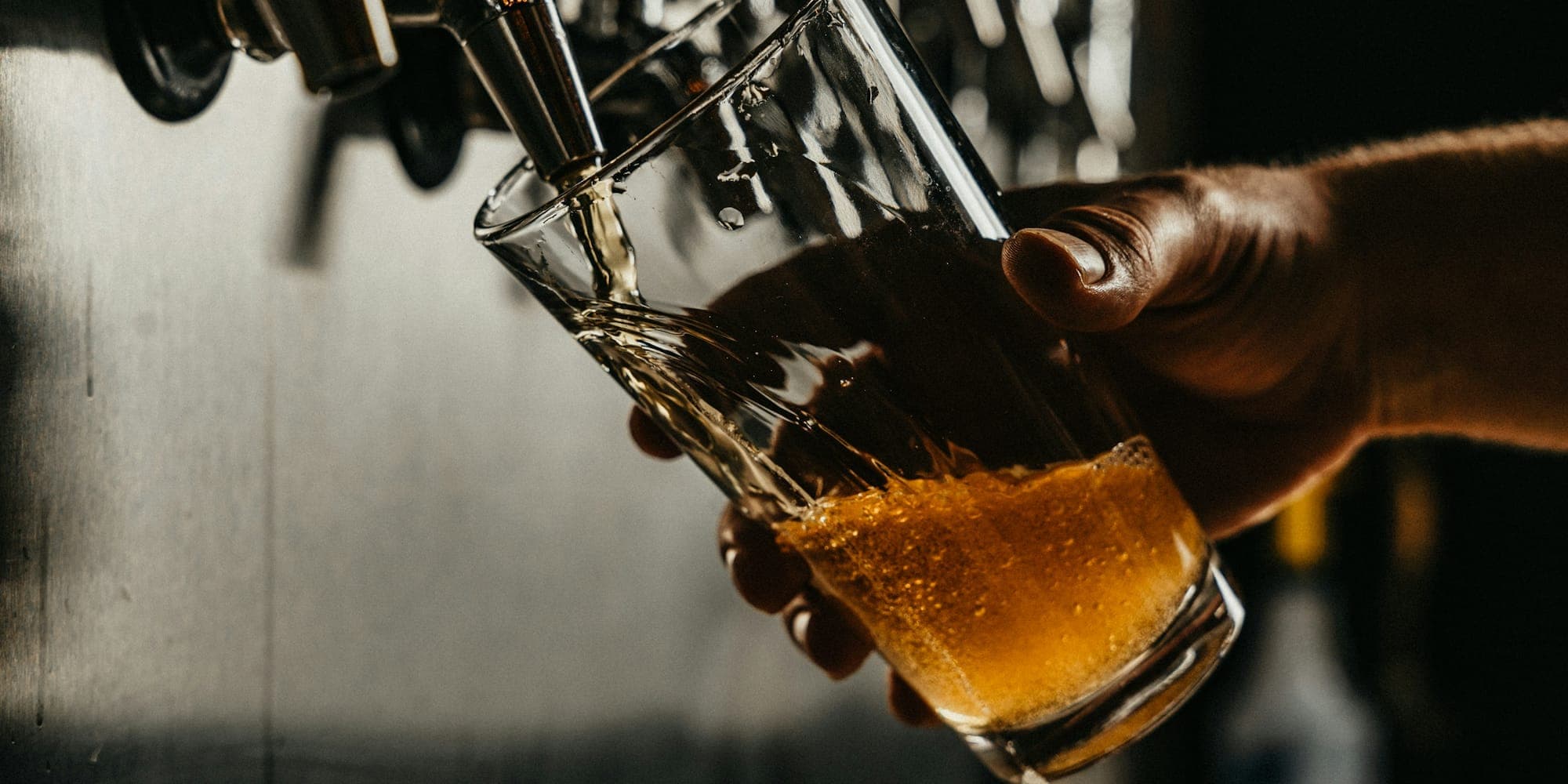
CO2, nitrogen and blended gas
CO2 for beer is the standard for most ales and lagers on short, direct-draw systems, where the pressure needed to push the beer is close to the pressure that keeps it properly carbonated.
Long-draw systems often need more pressure to move beer over the distance. Straight CO2 at that pressure would slowly overcarbonate the beer, so these systems use a blend of CO2 and nitrogen. Nitrogen for beer adds pushing pressure without adding much carbonation.
Nitro beers such as stouts pour with a nitrogen-heavy blended gas through a stout faucet, which gives them their creamy head. They need their own gas supply and regulator, separate from the beers on CO2 or a standard blend.
Regulators and gas blenders
A primary regulator at the gas source sets the main pressure, and secondary regulators let different beers run at different pressures from the same supply. A gas blender mixes CO2 and nitrogen on site from separate supplies, with nitrogen from cylinders or a nitrogen generator, instead of relying on premixed cylinders. We install and adjust regulators and blenders and set pressures to match each beer and line.
Leak checks
A gas leak wastes gas you paid for and can leave beer flat or pouring poorly. Leaks hide at fittings, regulator connections, worn coupler seals and damaged gas line, and they are easy to miss in a noisy bar. We leak-check the system from the tank to the keg and fix what we find.
CO2 is heavier than air and can collect in low, enclosed spaces such as basements and walk-in coolers, which is one more reason to keep a gas system tight.
Cylinder and bulk CO2 setups
Smaller systems usually run on high-pressure CO2 cylinders, sometimes several joined by a manifold so one can be swapped while the others keep pouring. Higher-volume venues may use a bulk CO2 system: an insulated tank on site that a gas supplier refills. We set up and connect cylinder manifolds and bulk CO2 systems, and help you choose the right setup for your volume and space.
Related services
Where we work
We work on commercial draft systems in the City of Chicago and suburban Cook, Lake, DuPage and McHenry counties.
Common questions
Where does the gas itself come from?
From your gas supplier. Our work is the equipment side: regulators, blenders, gas lines, manifolds, bulk system connections and leak checks.
Why use blended gas instead of straight CO2?
On a long-draw system, the pressure needed to push beer to the bar is often higher than the pressure that keeps it at the right carbonation. Straight CO2 at that pressure slowly adds carbonation, which leads to foamy pours. A CO2 and nitrogen blend supplies the pressure without overcarbonating the beer.
Why are we going through CO2 faster than usual?
If you are not pouring more beer than usual, a leak is the likely reason. Gas can escape at fittings, regulators, coupler seals or damaged lines without a sound you would notice in a busy bar. A leak check from the tank to the keg finds it.
Get in touch
Tell us about your bar, restaurant or venue and what your draft system needs.